Along the Mogollon Rim

We keep going back.  Each time it is different.  We started by turning into the road going to the Fish Hatchery, below the actual road,  We shot wildflowers along the road and what we think is called Tonto Creek Waterfall.  Then we drove up to the rim road where we took in some of the vista points before parking at Canyon Woods Lake for our picnic.  The weather was perfect.  The clouds photogenic.

In infrared processed in Silver FX Pro 2.

I cannot describe how happy and excited Doreen was to got so close to a pair of elk.  The encounter made her day.

Finally, there is always the trip home.  On this occasion we stopped several time.  There were great storm clouds to the north and the early golden light was illuminating the hillside.

I am always grateful to have great friends to go with me on photo trips.  Doreen's exuberance for the ordinary and Kati and Doreen's gratitude for the miracle of creation we are privileged to capture . . . what a really great day!!

Prescott Antique Car Show

Tom attended the 41st Annual Prescott Antique Car Club show. It showed a number of “World Class” cars, the likes of which Tom did not expect to see outside of the circuit of prestigious shows he attends across the country, much less in Prescott!. The show covered every inch of Watson Lake Park.

Detail of 1936 Coupe.

Tom asked Leland to pull his 1966 Oldsmobile Toronado out of its row for a series of quick shots. It was the first American production front wheel drive model.

This young lady’s Dad is a member of the Prescott Antique Auto Club and he enjoys restoring old Cushman vehicles like this three wheel mini hauler. She was using it to offer her specialty baked goods!

The Prescott FD had this gem on display. They bought it new back in 1930 and it has been meticulously restored. Tom stated that was the nicest firetruck he has ever seen.

1937 Chevrolet Commercial Delivery Truck.

It was overcast and there was a light shower for about 20 minutes.

This is twelve year old AJ with his dragster. He races and wins at National Championship events. He accelerates to 80 MPH while reaching the end of the 1/8 mile course in less than 8 seconds! He admitted than he had been beaten (once) by his ten year old sister Lindsay in her own dragster, seen in the background, called “Daddy’s Girl”.

Cushman Scooter with sidecar.

Ford pickup….see license plate for the year!

Shelby Cobra Mustang.

Detail from Shelby Cobra Mustang.

1913 Rio Touring Car. Tom learned that the car had been in the same family since 1956 and had undergone a complete concours-quality restoration. Tom told the owner that Jerry’s Dad had worked for Rio in Jerry’s birthplace of Lansing, MI. So, when Jerry came by later, after chatting with the owner for a while, he gave Jerry the last one of his custom made “REO Lansing, MI” t-shirts!

One of Tom’s favorite 1950’s cars is the 1957 Cadillac Eldorado Brougham. Produced in very low numbers, Cadillac built the chassis' in Detroit, then shipped them to Italy where the custom coach bodywork was formed by hand. They sold for $13,078 at a time when the regular Cadillac was only about $4000. One of its key features was the opposingly hinged doors which provided much easier entry.

See above.

As above.

One of the most amazing cars there was this 5/8-scale, drivable, hand-built replica of a 1949 Mercury.

Tom got away from the show long enough to get this fresh take on Watson Lake.

Sleek British sportscar, the 1956 Austin Healey.

Same as above.

Same as above.

The show’s swapmeet area was a place for the car restorers to buy and sell cars and parts. Tom thought $550

A Veteran’s assistance group had this hot rod tank on display in their booth, complete with driver!

Tom had never seen anything like the 30 antique engines that were all running. This one shows two large belt-drive wheels spinning along.

The sky had opened up nicely by the time Tom, Jerry and Geri headed back to the Valley.

1934 Ford coupe, with background showing the diversity of the attendees.

Actually, this was the start of Tom's day.  He and Jerry left very early.  What guys will do to show up early to a car show!!!

Hummingbirds and a Toucan

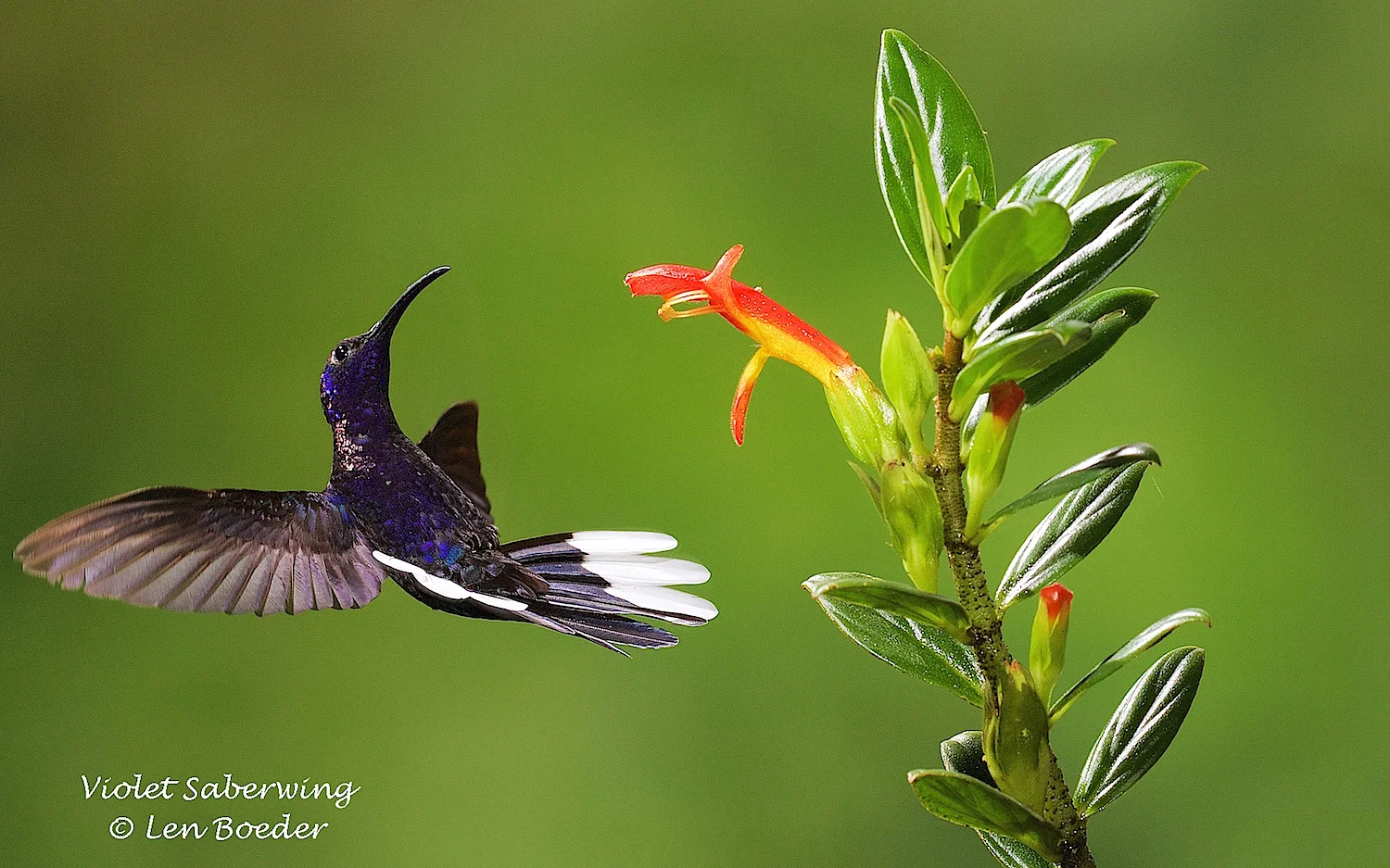
Len just returned from an 8 day trip to Costa Rica where he photographed some of the 14 species of hummingbirds and some toucans.  He is sharing these gorgeous images with us. 

Oh yes, I did mention a toucan!  Perhaps as Len gets more editing of thousands of photos taken he will send me some more toucan images.  Having grown up in the tropics I can appreciate a good toucan!

Ah, a day later but worth the wait.  We now have a second toucan!! I love toucans!!

I was fascinated by Len's image metadata.  All these were captured using a Canon EOS 7D Mark II and a Canon EF 100-400mm f/4.5-5.6L IS II USM lens.  His ISO varied from 200 to 400. An aperture of f/11 was the most frequent with just one or two at either f/9 or 10.  But what stumped me most was the shutter speed, a consistent 1/200!  Here is a description he sent me.

"You asked about the shutter speed in my hummingbird photos.  This is some random thoughts, it is not a how to but more of an explanation of what we did.  It would be necessary to go to a country with lots of hummingbird species.  Go to a lodge in that country that specializes in hummingbirds with lots of feeders.  Hire a photographer who specializes in hummingbird photography.  He or she will have all the special equipment to take hummingbird photos.  We chose Costa Rica because it fit the bill.  You are in the rain forest so you need a covered area with open sides for the flash equipment and yourself and all your gear so you protected from the intermittent daily rain. The lodge would need to have lots of feeders out and have been regularly feeding.  The setup has 5 flash units and a reflector to photograph against and a stand for the feeder or the flowers.  you will need a tripod, a decent camera with at least a 300mm lens.  A 100-400 zoom was perfect.  It is necessary to have a remote release so you don't have to look through the view finder.  The camera is in manual mode and using live view, the focus is set on the feeder or flower.  The recommendation was ISO 320, f/11 and 1/200.  The flash stops the action.  Sit or stand holding the remote and watch the feeder or flower.  The idea is to catch the hummer as it comes into the same plane as the feeder or flower.  My thought is that because of the equipment and the special technique, it really isn't a do it yourself project.  Our guide, Greg Basco, an American who lives in Costa Rica, has a tour company that does it all.  There were 7 of us and he was able to help us get his technique down perfectly even for those of us who had never done it before.  I hope this gives you an idea what we did."

It did.  Your sharing and generosity is so appreciated.